الخميس، 7 يونيو 2012

Postherpetic Neuralgia - GlaxoSmithKline And XenoPort Receive FDA Approval For Horizant


FDA approval is always welcome news, especially to patients needing treatment and stockholders waiting patiently for a return. GlaxoSmithKline and Xenoport announced today that the FDA has approved its Horizant new drug for postherpetic neuralgia (PHN) in adults.

The drug, known pharmaceutically as gabapentin enacarbil, is given as extended release tablets for the painf that occurs as a complication of shingles and affects the nerve fibres and skin. 

Shingles could be termed as the adult version of the childhood disease chicken pox. The virus, known as herpes zoster, causes a painful blistering skin rash. Whilst anyone can catch it, those not having had chicken pox or vaccines as children and those over the age of 60 are most at risk, and while it usually clears up within a few weeks, the pain and discomfort of postherpetic neuralgia can last months or even years.

Three clinical studies of Horizant involved 574 adult patients from the US, Canada and Germany. The effectiveness and safety of Horizant for the management of PHN was evaluated in a single 12-week principal efficacy trial, plus two supportive studies that all met their respective primary endpoints. 

Patients generally take 600mg twice daily, although doses can be adjusted for those with reduced renal function. During the 12 week trial, some 10% of patients complained of somnolence (sleepiness or drowsiness), but interestingly 8% of those on the placebo also complained of the same thing. Dizziness was reported in 17% of patients receiving the 1200mg of Horizant per day compared with 15% on the placebo. Perhaps those symptoms are common in patients with postherpetic neuralgia.

The Glaxo press release doesn't say what the success rate of the drug is and calls to the media office were not answered. The drug was originally discovered by Xenoport who will receive a $10M milestone payment from Glaxo when the first commercial sale of the drug is made. The drug is also marketed for restless leg syndrome under the brand name Regnite.

XenoPort is developing other drugs for neurological disorders, including neuropathic pain, spasticity, and Parkinson disease. The firm's arbaclofen placarbil candidate is in Phase III development for the treatment of spasticity, and the levodopa prodrug XP21279 has completed Phase II studies as a potential treatment for Parkinson disease. Arbaclofen placarbil is a drug that is converted in vivo to the R-isomer of the selective GABA-B agonist baclofen.

Written by Rupert Shepherd 

View drug information on Horizant.

Copyright: Medical News Today 

الخميس، 8 مارس 2012

25 Most Influential People in the Meetings Industry


The 25 Most Influential People in the Meetings Industry

Each week we'll highlight one member from our list of the 25 most influential people in the meetings industry, with the full list going live in July. Check back each week for new installments, or sign up for our weekly newsletter to get an early look at each winner.
reggiasmall

Reggie Aggarwal, founder, Cvent. 2011 was a great year for Aggarwal—especially July when the founder of the event management, venue selection, and web survey software raised $136 million in funding, the largest investment in history for the meetings and event technology industry. Cvent plans to use its investment for "substantial technology developments, continued global expansion, and potential acquisitions so the meetings industry will be feeling the impact of this for years to come.e. 

corbinsmall

Corbin Ball, Founder, Corbin Ball Associates. It seems like Ball (CSP, CMP, MS) has been around forever. But if he didn't exist, surely the meetings industry would have to invent him. He is the foremost authority on all things tech when it comes to the meetings industry. At a time when the pace of technological development is lightning fast, the industry has a crying need for more people like him, who can provide organizations with perspective on how to use this dizzying array of technology to improve meetings management. 
Ray Bloom Small

Ray Bloom, Chairman, IMEX Group.  It could be argued that no one did more for revitalizing the meetings industry in 2011 than Bloom. IMEX America (along with AIBTM) firmly established the European hosted-buyer MICE show concept, which Bloom pioneered, in the US. According to post show surveys, IMEX America will generate a total of $2.2 billion in business with IMEX America exhibitors.  

chiallo

Eduardo Chaillo, executive director of meetings for the Mexico Tourism Board. He's got one of the hardest jobs in the meetings business right now—selling Mexico— and he's doing a first-rate job. So good, that the Joint Meetings Industry Council (JMIC) just gave him its Profile and Power Award. The award, which recognizes individuals and organizations that have made "significant contributions" to advancing the awareness and influence of the meetings industry in their respective communities, was bestowed upon Chaillo because of his leadership in conducting a comprehensive economic impact study of Mexico's meetings industry.
Bed Bug Small

Cimex lectularius (The Bed Bug). Though not actually a person, (or even a mammal for that matter) the number of reported bedbug incidents in 2011 shattered 2010 totals by more than 660 percent, according to travel website Raveable.com. Overall, the number of individual hotels with bedbugs rose by 250 percent, making these parasites the most prolific event crashers in the history of the meetings industry. 

Roger Dow (Small)

Roger Dow, President, CEO, U.S. Travel Association. Under Dow's leadership, the meetings industry successfully lead the fight against the AIG Effect, and brought the meetings and events industry together for its first truly effective lobbying effort. From demonstrating the value of the business and it's impact on the U.S. economy to advocating visa reform to bring more international meetings to the U.S., Dow has been tireless—and quite possibly the most effective advocate the industry has ever had. 


Jack Dorsey Small

Jack Dorsey, creator of Twitter. In 2011, tweeting played a major role in bringing down dictatorships, organizing protests like Occupy Wall Street, and in general changing the way information is disseminated. You’d be hard pressed to find a conference, sales meeting, or tradeshow that doesn’t have a tweeting component as part of it’s pre- and onsite promotional strategy. It has also transformed attendees into brand ambassadors (or brand assassins in some cases). 


Abdalla Salem El-Badri_Small

Abdalla Salem El-Badri, Secretary General of OPEC. The price of oil affects everything from airfares to the cost of F&B. In 2011, the wildly fluctuating oil prices made it tough for everyone in the meetings industry to take positions when negotiating. As the public face of the most important cartel in the oil industry, Abdalla Salem El-Badri can alter the price of all goods and services simply by issuing a statement. 
Jim Evans Small
Jim Evans, CEO, Brand USA. Created by the Travel Promotion Act in 2011, Brand USA is America's first-ever global consumer brand. So overdue, it's actually pathetic, Evans has the gargantuan task of aligning a brand and corporate messaging strategy for a country that offers a range of destinations and experiences that are unparalleled in the world 
market. His level of success (or failure) at that task will have a profound effect on the meetings industry.

copy - successful meetings


Health & Academics

4 students in front of chalkboardThe academic success of America’s youth is strongly linked with their health.
Health-related factors such as hunger, physical and emotional abuse, and chronic illness can lead to poor school performance.1 Health-risk behaviors such as early sexual initiation, violence, and physical inactivity are consistently linked to poor grades and test scores and lower educational attainment.2-4
In turn, academic success is an excellent indicator for the overall well-being of youth and a primary predictor and determinant of adult health outcomes.5-7 Leading national education organizations recognize the close relationship between health and education, as well as the need to foster health and well-being within the educational environment for all students.8-11
Scientific reviews have documented that school health programs can have positive effects on educational outcomes, as well as health-risk behaviors and health outcomes.12-13 Similarly, programs that are primarily designed to improve academic performance are increasingly recognized as important public health interventions.14-15
Schools play a critical role in promoting the health and safety of young people and helping them establish lifelong healthy behaviors. Research also has shown that school health programs can reduce the prevalence of health risk behaviors among young people and have a positive effect on academic performance. CDC analyzes research findings to develop guidelines and strategies for schools to address health risk behaviors among students and creates tools to help schools implement these guidelines.

Hayley's Story


Hayley's Story

Throughout most of my adult life I had been very careful to try to choose organic foods as much as I could. I exercised a lot and always maintained a fairly high level of physical fitness. I bought my household products from health food stores, trying to avoid harmful chemicals whenever possible. I had been a natural health practitioner since 1995 and had helped many others achieve wellness.
Then in 2004 I was diagnosed with advanced cancer, beginining as uterine cancer and spreading throughout my organs. I was so ill, it was a massive effort just to get up and about each morning. I knew immediately that I did not want to go down the path of surgery, chemotherapy and radiation, so I had to decide very quickly what I was going to do.
At that time I stopped working and spent a lot of time sleeping. I juiced, took herbal supplements, did a massive liver detox and parasite cleanse. I had acupuncture sessions weekly and saw a kinesiologist regularly. I tested myself for IgG food allergies and then eliminated those foods strictly. I got hold of some information which showed me that I stillhad a massive chemical load in existence in my home even though I thought I had removed the harmful chemicals. This I changed immediately.
I also kept a good positive atttitude and decided once and for all that I was not going to 'be' as cancer patient - I was going to 'be' well.
The amazing part to this story is that after nine weeks of this regimen the doctor could not find any trace of cancer and that is still the case today.
My quick recovery taught me a lot about the human body’s amazing ability to heal when given the right tools and the right mindset. Good nutrition and the removal of harmful substances can trigger some fantastic changes. You can read the complete story in my book ‘Finding Wellness’.
Today I enjoy educating large groups of people on what they can do to experience greater wellness in their lives and I hold regular health seminars all around Australia. To find out where these seminars are being held, join our free Newsletter on the home page. Emails are sent out monthly to let you know where and when our seminars are being held. Please Note:I do not run a clinic, nor see patients privately.

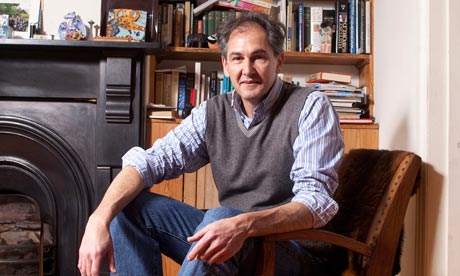
Mark Pagel: culture is central to human success


Mark Pagel
Mark Pagel is head of the Evolution Laboratory at the School of Biological Sciences, University of Reading. He has travelled the world studying evolution and the spread of cultures. He is also the author of Wired for Culture: The Natural History of Human Cooperation, in which he argues that human culture has surpassed genes in determining who we are and how we live.
You argue that culture exercises a sort of mind control over us?
Some people think culture is a virus that infects our minds and controls us in ways that don't serve us but serve it; I actually think we've tamed it so that it serves us quite exquisitely. We've actually evolved to embrace our cultures and allow them a degree of mind control over us in return for the prosperity and protection they give in return.
How did culture become this important?
Around 200,000 years ago, the defining event in modern human evolution occurred when humans acquired the capacity for culture. This was an ability to learn from others and to transmit knowledge, wisdom and skills. It was a new kind of evolution – we could call it idea evolution. Ideas were able to jump from mind to mind and it meant our cultures could adapt far more quickly than our genes could adapt.
When humans walked out of Africa and into the deserts of Saudi Arabia, they didn't need to wait for genes to arise that would confer some kind of adaptive advantage to living in the desert; humans could figure out how to make shelters, dig for water, domesticate camels and so on. Our ability to adapt at the cultural level shouldn't be seen as any different from our ability to adapt at the genetic level.
Both are streams of information that get passed down the generations; it is just that one has allowed us to adapt in hundreds or thousands of years, rather than hundreds of thousands of years.
You would say culture is the most successful way of making more people?
No other species has ever had such a long run of population increase. Most animals rise up to the carrying capacity of their environment and then they are stuck; if you're a wildebeest, you can't climb trees for fruit. They are limited by the environments their genes are adapted to. But we've been able to move around the world because we have been able to adapt at a cultural level to the many different environments on earth. Now, most species are having to adapt to us, rather than adapt to the environment. We've changed the environment of the whole world.
If the most successful cultural ideas are those that do us most good, why are we not fending off the bad ones that effect the environment, biodiversity etc?
You and I probably wouldn't be here if our ancestors hadn't been greedy savages. But we are now seeing that this isn't a sustainable strategy. So our species is confronted with its biggest conundrum and so far it isn't responding well. So far, you could categorise all the efforts, such as Kyoto, as abject failure. We shouldn't be surprised by that, but we should see that our co-operative nature gives us some glimmer of hope. What we're going to have to do is create a world where we are all in the same boat. Until we all start behaving in a way that acknowledges that all our fates are linked, there isn't much hope.
You claim that we have a cultural immune system to ward off bad ideas?
Ideas such as celibacy, reckless drug taking and suicide bombing – they act directly against our reproductive interests. What we should realise is that those things are at incredibly low levels, so it cannot be that easy for an idea to come into our mind and rule us.
I argue that we have developed an immune system to deal with the nasty ones, just as we have an immune system to deal with genetically based viruses. Those genetically based viruses can occasionally outpace us, but they haven't won, because we have this immune system inside us that is evolving in real time. I think it's reasonable to expect we've acquired a kind of cognitive immune system for testing out ideas and asking: are they any good? I have not a single shred of evidence that it exists; I can't find any cognitive immune cells floating round your brain, but our behaviour suggests that very few of us are taken in by suicide cults or drug abuse and so on.
You're not arguing that cultural identity is passed down the generations like genes?
Well, I am. We can speak of the fidelity of the transmission of genetic information and that fidelity is far greater than the fidelity of cultural information, but nevertheless the fidelity of transmission of culture should make us stand back in awe.
For example, with some difficulty, you and I can read Chaucer, despite there being hundreds of years of cultural transmission containing probably billions and billions of events – it should really astonish us that cultural transmission has this fidelity.
The remarkable fidelity of cultural transmission tells us something more – that our shared cultural knowledge has played a vital role in promoting our survival and prosperity. If it hadn't, there would not have been such a pressure for it to evolve into forms that are easy for us to remember and transmit to others. This means that you can be plucked from your cot and plonked in Tasmania and brought up a Tasmanian, and you'd be a Tasmanian.
So if I'd been dropped in KwaZulu-Natal at one day old, I could have become a Zulu?
You ask a delicate question because there are obvious difference in appearance. You would have been recognised as a strange omen. If we could avoid that obvious problem I'm sure you'd be a pretty good Zulu.
But if I took you out of your cot and dropped you high up in the Tibetan plateau you would struggle, because they have a gene that gives them a really extraordinary ability to process oxygen; that's a genetic difference. Yet it's also a facultative one – if you go there, on holiday you will probably vomit for the first few days, but you will respond and start making more haemoglobin, although you would probably would never be as good a high-altitude Tibetan as them. These are the exceptions that prove the rule.

Start-up with Successful Human Relations


The simple truth about any successful company anywhere in the world is that at one time or other some individual or small team had what we like to call a “light bulb moment.” You know exactly what we are talking about. It is that moment of clarity when we just see everything in the most simplest of terms and make a decision to go for the gold!
In business, that beautifully clear moment is typically when a successful company of the future starts up, hence the reason that these trailblazers have affectionately become known as “start-ups.”
Once the decision has been made to go for it—and most times, in doing so, change the world—everything starts to get nutty. All of the sudden a start-up needs cash to hire employees, which the founders then realize is the biggest line item on their budget. And then on top of all of that cash they need just for salaries, they also need a benefits package that will attract the right people to the business…and keep them there!
However, setting all finances aside, the ultimate challenge that any founder is going to face is that they likely have exceptionally good product skills, but probably have no idea what it takes to run a successful business; and to be successful, it takes exceptional human relations skills. After all, it is humans that build, market and sell the product, not to mention hire, manage payroll, and keep the lights on.
To get your start-up growing in the right direction (which clearly is up and to the right), spend time at the beginning your business planning your human relations strategy, which includes:
1.    Leadership—Every single person in your company needs to understand the strategy and clearly see how their individual work contributes to the company’s overall success. The strategy is the “what.” So that means you are also going to need a stellar set of innovative values to guide “how” the work gets done, too.
2.    Decision Making—Anyone who has ever worked in a start-up will fall down laughing should someone say that they are “fast paced.” The truth of the matter is that one year in a start-up typically equates to at least 3 years in an established business. So with everything moving at the speed of light, lots of decisions are being made. Start-ups will fail faster than an established business if too many wrong decisions are made, for obvious reasons. So then, to protect the business, get your product to market, and keep everyone working as a team, you have to teach employees to make the right decisions for the business every time a decision is made.
3.    Communication—Go ahead and get your PR strategy out of the way, but a start-up that misses the opportunity to communicate to employees early and often will soon have a revolt on their hands. People will literally vote with their feet and walk right out the door in the absence of good information. After all, communication is the lifeblood of any organization. So, unless you want to have cardiac arrest, you need a solid internal communications plan that keeps everyone humming along.
4.    Organization Social Structures—Unlike established businesses, start-ups tend to require more collaboration, especially across business lines if they are even established. (P.S. Try to avoid creating great big silos…they never work.) However, collaboration doesn’t just happen. You need a system of collaboration that will help your employees bring their best ideas to the table and work with each other in a way that helps you achieve what you started out to do in the first place.
Now, if you are a mid-to-late state start up, never fear; there is always time to get your company back on the right course of action. But, if you see that you are starting to lose people, especially around the 50-employee and 500-employee mark, waste no time in fixing what’s broken. No matter how well you are funded, you can’t just let your most valuable intellectual property walk out the door. It is people who make your company successful, so along with being focused on all of those wonderful MBA strategies they teach in business school, double down on creating a workplace that is happy, healthy, and productive.

يتم التشغيل بواسطة Blogger.