‏إظهار الرسائل ذات التسميات Success stories. إظهار كافة الرسائل

الثلاثاء، 19 يونيو 2012

10 Things I Look for When Reading a Business Plan


1-Don’t push adjectives. Let me assign my own. This year for every plan that really looks like it might be disruptive or game changing I saw 20 or so that claimed to be.
2- Tell stories. A story tells market need way better than general market numbers. Write about problems you solve and who has them, how you solve them, and why you do it better than anybody else.
3- I want a forecast that starts with specifics like channels or traffic and conversions or segments and builds up. I hate the forecast that assets some huge market and takes a small percentage of it. It seems like every time I read “this is a $X-billion-dollar market” the surrounding discussion lacks depth and credibility.
4- I want unit economics. Often this is part of a good forecast. Tell me what it costs to produce one unit, what the channel pays for it (if channels are relevant) or what the buyer pays for it, what it costs to ship, and so on.
5- I want realistic expenses. Most plans are pretty good about estimating direct costs but bad about underlying expenses. You can’t have a $20 million sales estimate with 10 employees in the company and a few hundred thousand dollars of marketing expense. It just doesn’t happen.
6- Never write that you have no competition. Having no competition means one of two things: either your business sucks, or you haven’t done your homework and you don’t know your business. Even the most amazing disruptive game-changing plans have competition. If not now, then tomorrow. Who’s going to enter this market?
7- I want good positioning. Don’t try to please everybody. Start with a relatively narrow product-market fit and, if you can, move it gradually up to more markets and more segments. Explain in your plan which segment is first and why. Explain who you’re leaving out of your market and why.
8- I want to see basic numbers. I expect projected monthly income, balance, and cash flow for the next year and annual projections for the second and third year. And I want to see them, as in useful business charts, but I want to be able to see the numbers in detail too.
9- I want to see milestones: dates and deadlines. And progress made. What have you actually done in the recent past? Write about achievements.
10- By far the best validation of a plan is actual sales made already. People have written checks. Second best are letters from future customers promising future business.
11- (Bonus point) Don’t muck it up with too much science. It’s not a research plan, it’s a business plan. Summarize the science so I have some idea and then tell me about the business.
12- (Bonus point) Don’t let the document get in the way. I don’t want to think about formatting or editing, I want to read your stories and imagine your future. Keep it moving and keep my mind on the business, not the misspellings or repetitions.
bplan


8 Factors that Make a Good Business Plan


?What makes a good business plan
Here’s the hard part, right at the beginning: the value of a business plan is measured in money. That’s hard for me at least, maybe not for you, but for me. As a genuine ex-hippy baby boomer entrepreneur, I like touchy-feely do-gooder measurement systems. But that’s not the real case. Like just about everything else in business, the value is money. Money in the bank.
The actual calculation is pretty hypothetical. You take the money in the bank with the business plan and subtract money in the bank without the business plan, and that’s the value. One of the two is just a guess. But there it is, a cold hard (although hypothetical) number.
With that in mind, here are some of the qualities of a good business plan, in order of importance:
ـــــــــــــــــــــــــــــــــــــــــــــــــــــــــــــــــــــــــــــــــــــــــــ
1. It fits the business need
We simply can’t look at business plans as generic. You have to start with whether or not the plan achieved its business purpose. Some plans exist to get investment. Some are supposed to support loan applications. Those are specialty uses, that apply to some business situations, while almost all businesses ought to develop management-oriented business plans that exist to help run the company, not to be presented to outsiders.
Obviously form follows function. The business plan used internally to manage the company doesn’t have to polish and present the company to outsiders, so it probably lives on a network, not on paper. But the plan as part of high-end startup looking for VC or angel investment does in fact have to present the business to outsiders. These are very different plans. Some of them have sales objectives, selling an idea, and a team, and a market, to investors. Some have a support objective, reassuring a lender about risk, usually with assets. My favorite business plans are about managing: starting and growing a company. A plan that might be great at selling the company might be bad at supporting a loan application, or for managing a company.
So point one, what makes a good business plan, is that it fits the business need. Does it achieve the business objective?
At this point it’s hard to avoid going into branches. I’m going to resist the temptation to write about what people look for in investment-related plans, and then the plan for lenders, or the operational plan. There are a lot of branches on that tree. Factors like readability and ease of navigation and covering all the main points depend a lot on whether those qualities affect achieving the plan’s business objective.
So it’s entirely possible to have an excellent business plan that’s never been printed, that isn’t edited, that contains only cryptic bullet points that only the internal management team understands.
And it’s also possible to have a well written, thoroughly researched, and beautifully presented business plan that’s useless.
ـــــــــــــــــــــــــــــــــــــــــــــــــــــــــــــــــــــــــــــــــــــــــــ
2. It’s realistic. It can be implemented.
The second measure of good or bad in a business plan is realism. You don’t get points for ideas that can’t be implemented. For example, a brilliantly written, beautifully formatted, and excellently researched business plan for a product that can’t be built is not a good business plan. The plan that requires millions of dollars of investment but doesn’t have a management team that can get that investment is not a good plan. A plan that ignores a fatal flaw is not a good plan.
ـــــــــــــــــــــــــــــــــــــــــــــــــــــــــــــــــــــــــــــــــــــــــــ
3. It’s specific. You can track results against plan.
Every business plan ought to include tasks, deadlines, dates, forecasts, budgets, and metrics. It’s measurable.
Ask yourself, as you evaluate a business plan: how will we know later if we followed the plan? How will we track actual results and compare them against the plan? How will we know if we are on plan or not?
While blue-sky strategy is great (or might be, maybe), good planning depends more on what, when, who, and how much.
ـــــــــــــــــــــــــــــــــــــــــــــــــــــــــــــــــــــــــــــــــــــــــــ
4. It clearly defines responsibilities for implementation
You have to be able to identify a single person will be responsible for every significant task and function. A task that doesn’t have an owner isn’t likely to be implemented. You can go through a business plan and look to see whether or not you can recognize a specific person responsible for implementation at every point.
ـــــــــــــــــــــــــــــــــــــــــــــــــــــــــــــــــــــــــــــــــــــــــــ
5. It clearly identifies assumptions
This is very important because business plans are always wrong. They’re done by humans, who are guessing the future, and humans guess wrong. So business plans must clearly show assumptions up front because changed assumptions ought to lead to revised plans. You identify assumptions and keep them visible during the following planning process.
ـــــــــــــــــــــــــــــــــــــــــــــــــــــــــــــــــــــــــــــــــــــــــــ
6.  It’s communicated to the people who have to run it
At this point we leave the discussion of the plan itself, as if it were a stand-alone entity, and get into how the plan is managed. The first five points here are about the plan. You can deal with them as the plan develops. This and the following two are about the management of the plan.
I know that’s kind of tough, because it means that a plan that isn’t managed isn’t a good plan. But I can live with that.
So a good plan is communicated. Up above, where I suggest that the qualities of writing and editing are not essential for all plans, and I reference cryptic bullet points that only the team understands: I stick with that here. If only the team understands them it, it can still be a good plan; but it has to be communicated to that team.
We’re judging the plan by the business improvements it causes; in some sense, by the implementation it causes. So people in charge have to know and understand the plan. Plans in drawers, or locked on a single computer, only work when it’s a one-person organization and nobody else has to know the plan.
ـــــــــــــــــــــــــــــــــــــــــــــــــــــــــــــــــــــــــــــــــــــــــــ
7.  It gets people committed
Here too it’s about the process surrounding the plan, more than the plan itself. The plan has to have the specifics in point 3 and responsibilities as in point 4, but the management has to take them to the team and get the team committed.
For the one-person business that’s easier, but still important.
Definition of commitment: in a bacon and egg breakfast, the chicken is involved, and the pig is committed.
ـــــــــــــــــــــــــــــــــــــــــــــــــــــــــــــــــــــــــــــــــــــــــــ
8. It’s kept alive by follow up and planning process
Sadly, you can have all seven of the above points, and if you drop the ball — the plan in the drawer syndrome — then the plan still isn’t a good plan. It has to bring the planning process with it, meaning regular review and course correction.
No business plan is good if it’s static and inflexible. Planning isn’t about predicting the future once a year and then following that predicted future no matter what. Planning is steering and management. It takes a process of regular review and course correction.

bplans

الخميس، 7 يونيو 2012

Fifty Habits of Highly Successful People


So I thought that I might write a quick review of every self-help book ever written all right here in this one little article. Simple enough. I love the easy jobs. Surely it couldn’t be that hard, could it? I figured that maybe I could take the important lessons from every self-help book I’ve read and every life experience I’ve endured, condense all that into fifty key points and save everybody a whole bunch of reading time. Sure, global book sales in the self-help field might take a down-turn for a decade or so, but I’m willing to take that chance and put in a solid sixty minutes (or so) work for the good of humanity; my gift to mankind.
Selfless I know.
I thought that perhaps I could follow Stephen Covey’s lead (the Seven Habits) and come up with my own list of say… Fifty Habits (in truth, some of them are more qualities, than habits). It couldn’t be too difficult to distill all those millions of words, tens of thousands of books and that vast well of information, inspiration, wisdom and insight which has been collated over the centuries into one teensy-weensy article by the ex-fat kid (me). Who else could be better qualified?
Don’t answer that.
Habits of successful people….
1. They look for and find opportunities where others see nothing.
2. They find a lesson while others only see a problem.
3. They are solution focused.
4. They consciously and methodically create their own success, while others hope success will find them.
5. They are fearful like everyone else, but they are not controlled or limited by fear.
6. They ask the right questions – the ones which put them in a productive, creative, positive mindset and emotional state.
7. They rarely complain (waste of energy). All complaining does is put the complainer in a negative and unproductive state.
8. They don’t blame (what’s the point?). They take complete responsibility for their actions and outcomes (or lack thereof).
9. While they are not necessarily more talented than the majority, they always find a way to maximise their potential. They get more out of themselves. They use what they have more effectively.
10. They are busy, productive and proactive. While most are laying on the couch, planning, over-thinking, sitting on their hands and generally going around in circles, they are out there getting the job done.


11. They align themselves with like-minded people. They understand the importance of being part of a team. They create win-win relationships.
12. They are ambitious; they want amazing – and why shouldn’t they? They consciously choose to live their best life rather than spending it on auto-pilot.
13. They have clarity and certainty about what they want (and don’t want) for their life. They actually visualise and plan their best reality while others are merely spectators of life.
14. They innovate rather than imitate.
15. They don’t procrastinate and they don’t spend their life waiting for the ‘right time’.
16. They are life-long learners. They constantly work at educating themselves, either formally (academically), informally (watching, listening, asking, reading, student of life) or experientially (doing, trying)… or all three.
17. They are glass half full people – while still being practical and down-to-earth. They have an ability to find the good.
18. They consistently do what they need to do, irrespective of how they are feeling on a given day. They don’t spend their life stopping and starting.
19. They take calculated risks – financial, emotional, professional, psychological.
20. They deal with problems and challenges quickly and effectively, they don’t put their head in the sand. They face their challenges and use them to improve themselves.
21. They don’t believe in, or wait for fate, destiny, chance or luck to determine or shape their future. They believe in, and are committed to actively and consciously creating their own best life.
22. While many people are reactive, they are proactive. They take action before they have to.
23. They are more effective than most at managing their emotions. They feel like we all do but they are not slaves to their emotions.
24. They are good communicators and they consciously work at it.


25. They have a plan for their life and they work methodically at turning that plan into a reality. Their life is not a clumsy series of unplanned events and outcomes.
26. Their desire to be exceptional means that they typically do things that most won’t. They become exceptional by choice. We’re all faced with live-shaping decisions almost daily. Successful people make the decisions that most won’t and don’t.
27. While many people are pleasure junkies and avoid pain and discomfort at all costs, successful people understand the value and benefits of working through the tough stuff that most would avoid.
28. They have identified their core values (what is important to them) and they do their best to live a life which is reflective of those values.
29. They have balance. While they may be financially successful, they know that the terms money and success are not interchangeable. They understand that people who are successful on a financial level only, are not successful at all. Unfortunately we live in a society which teaches that money equals success. Like many other things, money is a tool. It’s certainly not a bad thing but ultimately, it’s just another resource. Unfortunately, too many people worship it.
30. They understand the importance of discipline and self-control. They are strong. They are happy to take the road less travelled.
31. They are secure. They do not derive their sense of worth of self from what they own, who they know, where they live or what they look like.
32. They are generous and kind. They take pleasure in helping others achieve.
33. They are humble and they are happy to admit mistakes and to apologise. They are confident in their ability, but not arrogant. They are happy to learn from others. They are happy to make others look good rather than seek their own personal glory.
34. They are adaptable and embrace change, while the majority are creatures of comfort and habit. They are comfortable with, and embrace, the new and the unfamiliar.


35. They keep themselves in shape physically, not to be mistaken with training for the Olympics or being obsessed with their body. They understand the importance of being physically well. They are not all about looks, they are more concerned with function and health. Their body is not who they are, it’s where they live.
36. They have a big engine. They work hard and are not lazy.
37. They are resilient. When most would throw in the towel, they’re just warming up.
38. They are open to, and more likely to act upon, feedback.
39. They don’t hang out with toxic people.
40. They don’t invest time or emotional energy into things which they have no control of.
41. They are happy to swim against the tide, to do what most won’t. They are not people pleasers and they don’t need constant approval.
42. They are more comfortable with their own company than most.
43. They set higher standards for themselves (a choice we can all make), which in turn produces greater commitment, more momentum, a better work ethic and of course, better results.
44. They don’t rationalise failure. While many are talking about their age, their sore back, their lack of time, their poor genetics, their ‘bad luck’, their nasty boss and their lack of opportunities (all good reasons to fail), they are finding a way to succeed despite all their challenges.
45. They have an off switch. They know how to relax, enjoy what they have in their life and to have fun.
46. Their career is not their identity, it’s their job. It’s not who they are, it’s what they do.
47. They are more interested in effective than they are in easy. While the majority look for the quickest, easiest way (the shortcut), they look for the course of action which will produce the best results over the long term.
48. They finish what they start. While so many spend their life starting things that they never finish, successful people get the job done – even when the excitement and the novelty have worn off. Even when it ain’t fun.
49. They are multi-dimensional, amazing, wonderful complex creatures (as we all are). They realise that not only are they physical and psychological beings, but emotional and spiritual creatures as well. They consciously work at being healthy and productive on all levels.
50. They practice what they preach. They don’t talk about the theory, they live the reality.
So there you have it, your days of reading self-help books are done!
Okay, maybe not. I may have missed a few. Feel free to add a habit or two of your own to the list.


lifehack

الخميس، 8 مارس 2012

Hayley's Story


Hayley's Story

Throughout most of my adult life I had been very careful to try to choose organic foods as much as I could. I exercised a lot and always maintained a fairly high level of physical fitness. I bought my household products from health food stores, trying to avoid harmful chemicals whenever possible. I had been a natural health practitioner since 1995 and had helped many others achieve wellness.
Then in 2004 I was diagnosed with advanced cancer, beginining as uterine cancer and spreading throughout my organs. I was so ill, it was a massive effort just to get up and about each morning. I knew immediately that I did not want to go down the path of surgery, chemotherapy and radiation, so I had to decide very quickly what I was going to do.
At that time I stopped working and spent a lot of time sleeping. I juiced, took herbal supplements, did a massive liver detox and parasite cleanse. I had acupuncture sessions weekly and saw a kinesiologist regularly. I tested myself for IgG food allergies and then eliminated those foods strictly. I got hold of some information which showed me that I stillhad a massive chemical load in existence in my home even though I thought I had removed the harmful chemicals. This I changed immediately.
I also kept a good positive atttitude and decided once and for all that I was not going to 'be' as cancer patient - I was going to 'be' well.
The amazing part to this story is that after nine weeks of this regimen the doctor could not find any trace of cancer and that is still the case today.
My quick recovery taught me a lot about the human body’s amazing ability to heal when given the right tools and the right mindset. Good nutrition and the removal of harmful substances can trigger some fantastic changes. You can read the complete story in my book ‘Finding Wellness’.
Today I enjoy educating large groups of people on what they can do to experience greater wellness in their lives and I hold regular health seminars all around Australia. To find out where these seminars are being held, join our free Newsletter on the home page. Emails are sent out monthly to let you know where and when our seminars are being held. Please Note:I do not run a clinic, nor see patients privately.

Mark Pagel: culture is central to human success


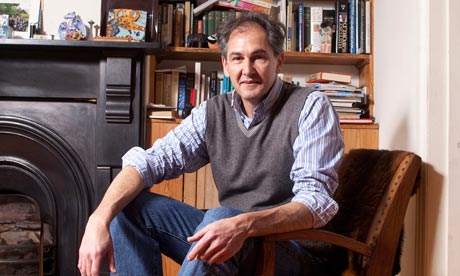
Mark Pagel
Mark Pagel is head of the Evolution Laboratory at the School of Biological Sciences, University of Reading. He has travelled the world studying evolution and the spread of cultures. He is also the author of Wired for Culture: The Natural History of Human Cooperation, in which he argues that human culture has surpassed genes in determining who we are and how we live.
You argue that culture exercises a sort of mind control over us?
Some people think culture is a virus that infects our minds and controls us in ways that don't serve us but serve it; I actually think we've tamed it so that it serves us quite exquisitely. We've actually evolved to embrace our cultures and allow them a degree of mind control over us in return for the prosperity and protection they give in return.
How did culture become this important?
Around 200,000 years ago, the defining event in modern human evolution occurred when humans acquired the capacity for culture. This was an ability to learn from others and to transmit knowledge, wisdom and skills. It was a new kind of evolution – we could call it idea evolution. Ideas were able to jump from mind to mind and it meant our cultures could adapt far more quickly than our genes could adapt.
When humans walked out of Africa and into the deserts of Saudi Arabia, they didn't need to wait for genes to arise that would confer some kind of adaptive advantage to living in the desert; humans could figure out how to make shelters, dig for water, domesticate camels and so on. Our ability to adapt at the cultural level shouldn't be seen as any different from our ability to adapt at the genetic level.
Both are streams of information that get passed down the generations; it is just that one has allowed us to adapt in hundreds or thousands of years, rather than hundreds of thousands of years.
You would say culture is the most successful way of making more people?
No other species has ever had such a long run of population increase. Most animals rise up to the carrying capacity of their environment and then they are stuck; if you're a wildebeest, you can't climb trees for fruit. They are limited by the environments their genes are adapted to. But we've been able to move around the world because we have been able to adapt at a cultural level to the many different environments on earth. Now, most species are having to adapt to us, rather than adapt to the environment. We've changed the environment of the whole world.
If the most successful cultural ideas are those that do us most good, why are we not fending off the bad ones that effect the environment, biodiversity etc?
You and I probably wouldn't be here if our ancestors hadn't been greedy savages. But we are now seeing that this isn't a sustainable strategy. So our species is confronted with its biggest conundrum and so far it isn't responding well. So far, you could categorise all the efforts, such as Kyoto, as abject failure. We shouldn't be surprised by that, but we should see that our co-operative nature gives us some glimmer of hope. What we're going to have to do is create a world where we are all in the same boat. Until we all start behaving in a way that acknowledges that all our fates are linked, there isn't much hope.
You claim that we have a cultural immune system to ward off bad ideas?
Ideas such as celibacy, reckless drug taking and suicide bombing – they act directly against our reproductive interests. What we should realise is that those things are at incredibly low levels, so it cannot be that easy for an idea to come into our mind and rule us.
I argue that we have developed an immune system to deal with the nasty ones, just as we have an immune system to deal with genetically based viruses. Those genetically based viruses can occasionally outpace us, but they haven't won, because we have this immune system inside us that is evolving in real time. I think it's reasonable to expect we've acquired a kind of cognitive immune system for testing out ideas and asking: are they any good? I have not a single shred of evidence that it exists; I can't find any cognitive immune cells floating round your brain, but our behaviour suggests that very few of us are taken in by suicide cults or drug abuse and so on.
You're not arguing that cultural identity is passed down the generations like genes?
Well, I am. We can speak of the fidelity of the transmission of genetic information and that fidelity is far greater than the fidelity of cultural information, but nevertheless the fidelity of transmission of culture should make us stand back in awe.
For example, with some difficulty, you and I can read Chaucer, despite there being hundreds of years of cultural transmission containing probably billions and billions of events – it should really astonish us that cultural transmission has this fidelity.
The remarkable fidelity of cultural transmission tells us something more – that our shared cultural knowledge has played a vital role in promoting our survival and prosperity. If it hadn't, there would not have been such a pressure for it to evolve into forms that are easy for us to remember and transmit to others. This means that you can be plucked from your cot and plonked in Tasmania and brought up a Tasmanian, and you'd be a Tasmanian.
So if I'd been dropped in KwaZulu-Natal at one day old, I could have become a Zulu?
You ask a delicate question because there are obvious difference in appearance. You would have been recognised as a strange omen. If we could avoid that obvious problem I'm sure you'd be a pretty good Zulu.
But if I took you out of your cot and dropped you high up in the Tibetan plateau you would struggle, because they have a gene that gives them a really extraordinary ability to process oxygen; that's a genetic difference. Yet it's also a facultative one – if you go there, on holiday you will probably vomit for the first few days, but you will respond and start making more haemoglobin, although you would probably would never be as good a high-altitude Tibetan as them. These are the exceptions that prove the rule.

يتم التشغيل بواسطة Blogger.